


Getting people to use your app is almost as hard as getting people to download it. With AI making building much easier, this problem is more visible than ever. This article explores why improving retention is one of the most worthy uses of your time and money, and how you can do it.
Retention is a biproduct of every app decision you have made so far, so figuring out how to fix it can feel slightly overwhelming. At the end of the day, if people don't come back to your app, you'll have a whole bunch headaches. You might see lower subscription revenue, higher churn, fewer bookings or even negative press.
Hopefully, this article will give you food for thought. I've drawn on my experience gained at Pocketworks, where we have developed, operated and grown apps since 2012. We're both a developer and venture partner, and our our portfolio has generated hundreds of millions of revenue in the past 2 years alone. Retention rates are a huge part of that.
Let's start with a high level view.
Where retention fits into your mobile strategy
If you've published an app, you know there are so many things to get right; from roadmap prioritisation and user experience to paywall optimisation, product analytics and your app store pages. The list goes on...
So where does retention fit in? Well, it's the sum of many parts, including all the above aspects of your app, and more. Figuring out how to improve retention can be a bit overhwelming. Where do you start? Do you even have a retention problem? Or does it lie elsewhere?
One thing that might help is to look at it through a certain lens. My recommend is a tool called Pirate Metrics. It helps you consider your app retention and how it relates to aspects of your app. You can dig deper on pirate metrics in another blog post, but for new let's just assume that your app customers pass through a virtuous cycle that looks a bit like this:
- You acquire users, usually through marketing
- They are "Activated", meaning they have an "aha moment" and understand your value to them
- You retain them, keeping them coming back (the subject of this article)
- You also generate some revenue from them, because they think your value is worth paying for
- You also delight people - your app is so good they refer it to other people, helping drive more acquisition (viral apps do this incredibly well)
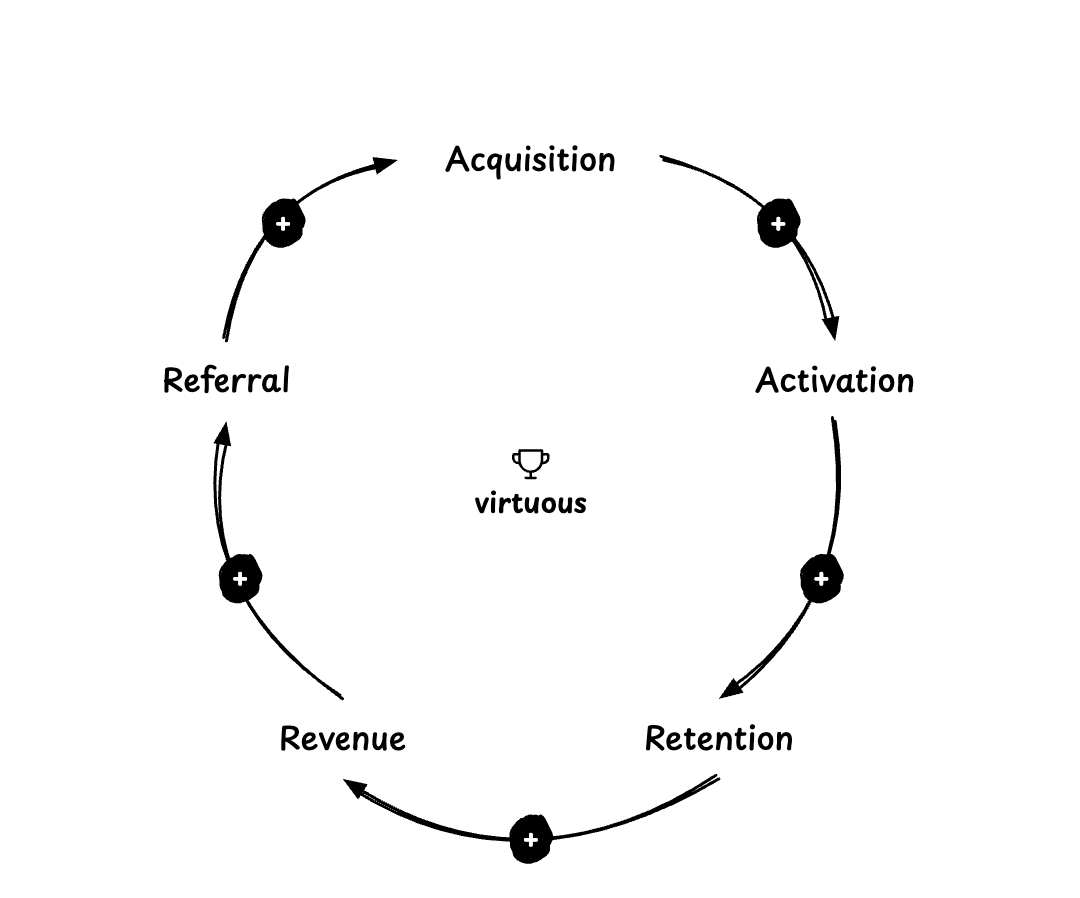
The above diagram shows Pirate Metrics as a cause-and-effect loop.
Any weak link in the chain will negatively affect your success. Are you offering a poor user experience? You're referals will drop, bringing fewer new customers. Struggling to activate customers so they "get it"? There's very little chance they be retained.
It's worth asking yourself, do you even have a retention problem? Retention is downstream of acquisition and activation, could your real problems lie there?
We'll cover this more shortly. For now, I'll assume you DO have a retention problem, so let's look at the high level ways to address it.
Four ways to improve retention
Here's three things I've noticed that make an impact to your retention.
- Attract the right customers
- Offer more value to your users (better features or service)
- Design for retention
- Use retention hacks (tricks to keep people coming back)
I suspect you are here to learn about retention hacks. After all, you just want to do stuff that gets more people to come back. As you'll see, that's important, but so are the first two elements.
The first one is the importance of attracting the right app users in the first place.
Attract the right customers
Lucy Beldon (our Mobile Growth Manager) has been running various advertising campaigns for apps on Google, Meta and the app stores. One thing she notices is that different adverts get different results when it comes to retention.
For example, we ran one advert for Carbs & Cals that targetted XXX people who really need and want the app. Those users are likely to keep coming back, spend money, and really appreciate the app.
Why is this? Well, it's all about alignment between what the users need, how much they need it, and how well the app serves those needs.
An exaggerated example would be to run an advert for your GLP-1 app, but only target people who do a lot of sports. It's unlikely this audience is the one that needs your app, so your not going to get great retention from this campaign.
One might argue that retention is also a marketing problem. It's about what you say and who you say it to and where you say it. And that goes beyond just running effective advertising campaigns. Your app store pages, copy, artwork, blog posts, newsletter, website and app onbaording screens all play a role in attracting the right audience so that you can retain them.
So, ask yourself this: are the people you attract to your app the ones most likely to get maximum value from it? Getting the right users will help you increase your retention.
Speaking of value, let's move on to how you can provide value to customers to increase your retention rates.
Give more value to customers
There's no point spending loads of energy on attracting the right users if your app is funamentally not doing its job very well. In other words, not giving customers much value.
Customer value is a technology concern and a business concern. In the world of apps and digital products, the customer value is the product of several forces that all come together to drive retention:
- Marketing fit: are you bringing people that actually want what you offer?
- Features: are you providing enough utility?
- User experience: Is it convenient and easy?
- Business operations: Can you provide adequate product, service and support?
For example, if you're a nutritional info app like Carbs & Cals, users will come back to the app more often if they can lookup any foods nutritional data, and the experience of doing that is nice and slick. UX matters here.
Or, if you're a taxi company like Veezu, people will come back to book more often if the cab arrives on time, is clean, and they don't get ripped off on price. Of course, the user experience has to good, and the app must have enough features to allow them to get the job done.
Here's a quick summary of what value looks like to users.
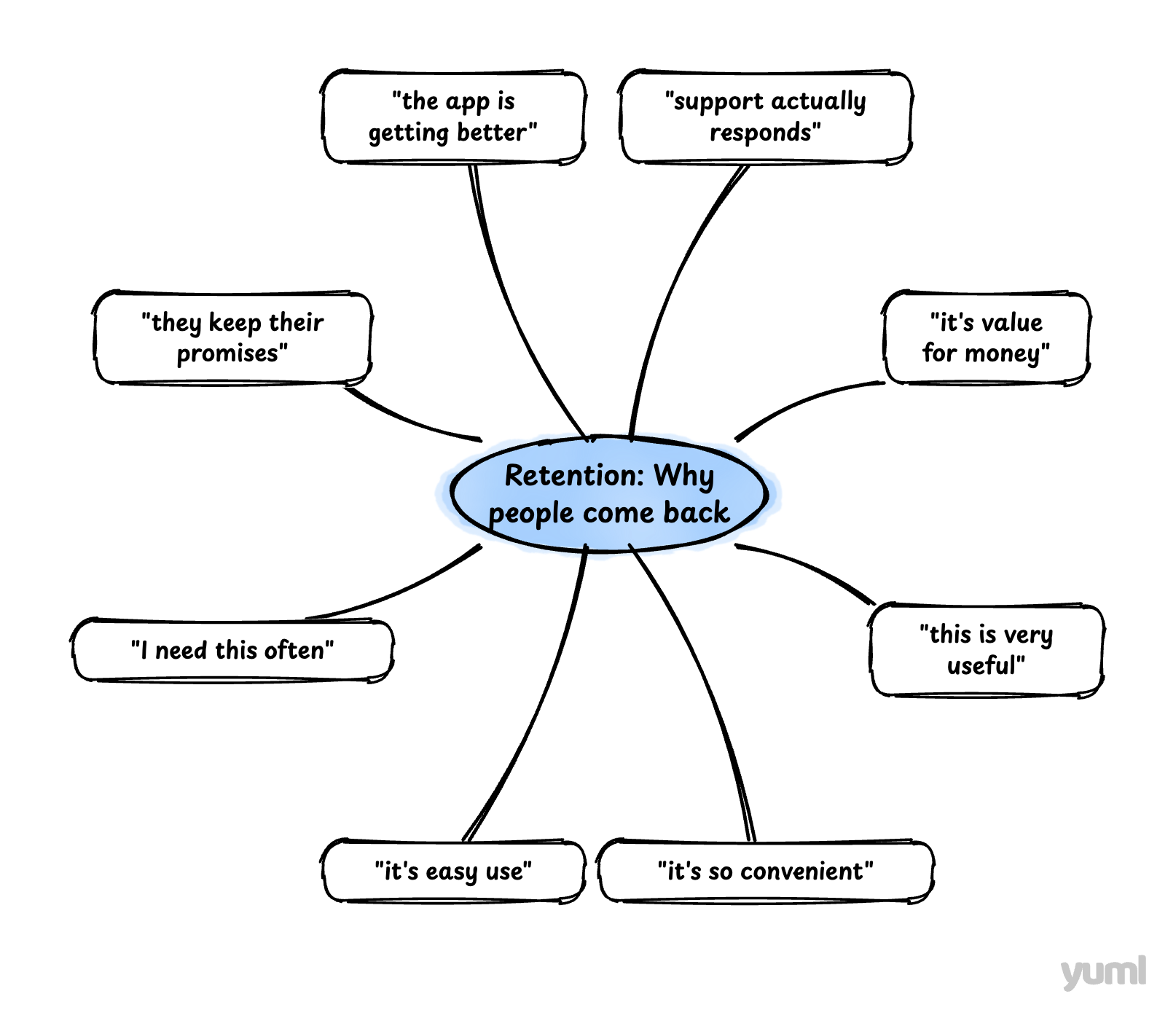
So, if you want to improve retention, you would do well to start by questioning your product and service quality. Or, in other words, what do people like, and what don't they like about your offering?
In case you're wondering, a good way to understand what customers think is through user research. You can do it guerilla style by analysing your reviews or customer service desk tickets. Or, you could hire a company like Pocketworks to do an in-depth survey and user interviews. It's pretty inexpensive and can be done in a few weeks.
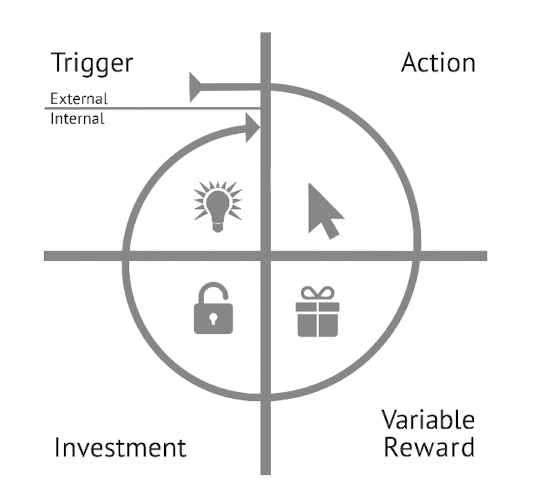
If you're 100% sure your value is there and customers love your core offering, then perhaps you need to check you're actually designing for retention. Let's quickly look at that.



 2025 Pocketworks Mobile Ltd