


2025 has seen a lot of change for app marketing and businesses trying to grow mobile apps. AI has turbocharged the pace of change, and Apple has rolled out several key updates to its algorithm, which have had a massive impact on app growth.
If you’re trying to learn about mobile marketing, grow an app, or hoping to launch an app soon, this guide gives a rundown of some of the big changes that have taken place this year and gives you some practical tips on how to take advantage.
App marketing is really tough right now!
At the time of writing (early December 2025), 627,673 publishers have released apps on Google Play, and 871,870 publishers have released apps on the App Store.
That is nearly 1.5 million new apps combined. Competition is fierce, with over 3,500 new apps released every day (around 2,057 on the App Store and 1,669 on Google Play, according to 42Matters).
The ASO space is shifting fast, and transparency is limited, with both stores remaining somewhat opaque as to how their algorithms work (more on that later). This means it’s more important than ever to stay on top of your App Store Optimisation to keep testing what works.
With more competition in both stores, you have more aggressive keyword targeting from competitors and peers. As more people start using AI to help write and optimise metadata, we’re seeing a convergence toward the same 50–80 keywords. The lack of unique keyword strategies means more competition around broad, generic terms and saturation of common longtail queries.
It is harder to rank and stand out when everyone is copying each other.
What this means for app marketing in 2026
Standing out requires more than good metadata. Your brand story, screenshot narrative, UX quality, user sentiment, and continuous ASO iteration matter more than ever.
Your competitive advantage comes from using emerging AI tools alongside human expertise and a great user experience to carve out a unique proposition for your app.
Without ratings, gaining visibility is really hard
One of the biggest hurdles to gaining app visibility is encouraging users to rate and review your app. This is especially prominent in apps that are just starting out and, likely, have a low number of active users. You’re stuck in a paradox. You need more active users so they can give you a rating - BUT - you don’t have enough active users to achieve the volume or velocity of ratings needed to push your app up the rankings and attract new users. You’re stuck between a rock and a hard place!
In 2025, both stores increased weighting on the factors below for rankings:
- User sentiment: What are users saying about your app experience?
- Recency: When was the last rating your app received?
- Volume velocity: Are you getting consistent ratings?
- Response rate: Are you responding to reviews (good and bad)?
Weirdly, getting 10 low ratings is actually better for visibility than getting none at all. This is because apps with poor review velocity get penalised, regardless of the overall star rating (although poor ratings absolutely do have an impact on downloads and conversions. If your ratings are bad, it’s hard to convince new users to download).
Getting users to rate your app can be tricky. Figuring out the best time to ask them for feedback is key. Ideally, you should ask a user for a rating after they have derived some value or satisfaction within your app. However, user retention is a common headache for app publishers - the risk is that if you wait too long to ask for feedback, most of your users have already dropped off!
|
Android (all categories) |
iOS (all categories) |
|
|
Day 1 retention |
20.30% |
23.90% |
|
Day 30 retention |
2.10% |
3.70% |
Many apps show a rating prompt during onboarding to try to reach as many users as possible. However, this isn’t a great approach. Users are unlikely to have actually derived much value, and it interrupts the onboarding process (not great UX).
What this means for your 2026 app marketing strategy
Getting ratings and reviews absolutely has to be on your priority list (and near the top). Here are some top tips and areas to focus on:
- Look at your in-app ratings prompt. Optimising where and when this appears to users, and figuring out your app’s ‘ah-ha’ moment, are essential. We’re currently working on a tool called Appero that helps you do this. You can sign up now for early access once the Beta is ready. When we put it into the Carbs & Cals app, we saw a 954% increase in positive ratings in just 10 days. And a nice little ASO boost!
- Make sure you have a process in place to respond to all reviews (good and bad). Your review response rate is taken into consideration by both stores. A high response rate positively impacts your visibility.
- Have a process in place to analyse user sentiment and reviews. They are a fantastic resource to understand what users love and where you need to improve. I use AI tools to bulk analyse app reviews and get an instant snapshot of what users are thinking. These are reviewed regularly in product meetings and are part of our roadmap development.
Both app stores are using AI to analyse your listings
Both the App Store and Google Play made changes to their algorithms in 2025 to use AI & LLMs to analyse and interpret your app metadata and listings.
This means that apps can now rank for terms that aren’t explicitly in their metadata. For example, if your app ranks for the term “food tracker”, you may also start to climb the rankings for a related keyword, such as “calorie counter” - even if it isn’t explicit in your metadata.
On Google Play, reviews are mined for keywords. So if users are leaving reviews that comment on your app’s “food tracking” capabilities, this also helps to strengthen your ranking. In April, Apple announced a rollout of AI-powered review summaries on the App Store, which will give users an instant snapshot of user sentiment.
Earlier this year, Apple rolled out a tool that lets you link specific keywords to Custom Product Pages, meaning custom pages can now be served in organic app store listings. This has been available on Google Play for some time and gives publishers more control to personalise app listings and improve conversions.
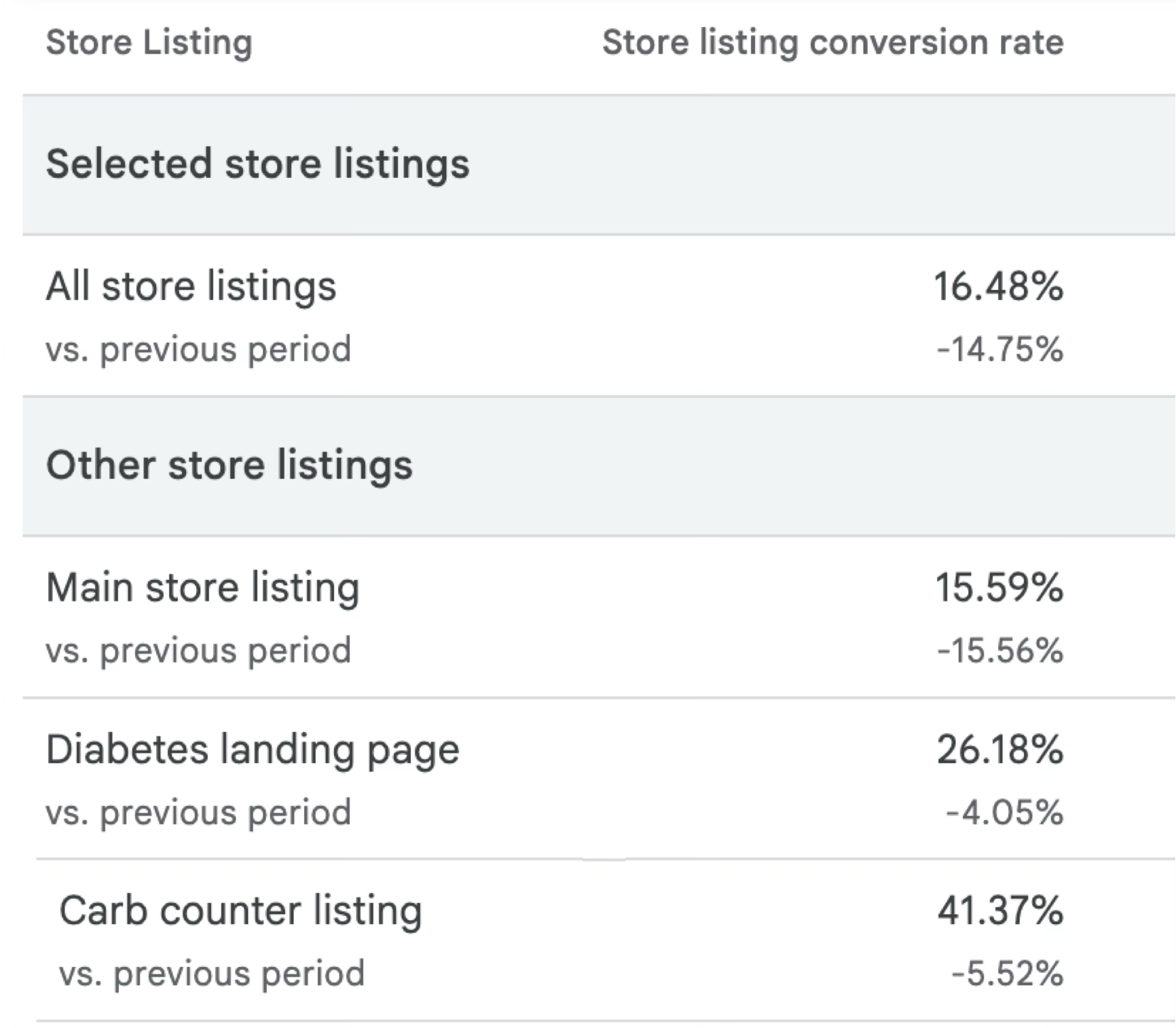
Example of custom listings conversion rates on Google Play
What this means for ASO in 2026
Your keyword strategy needs to shift to focus more on broader semantic clusters, rather than individual keywords.
I’d recommend you undertake an exercise to find, group, and segment keywords into clusters. Here are the topline steps to follow:
- Find and analyse the keywords you’re currently ranking for.
- Find and analyse the keywords your competitors and peers are ranking for.
- Find all related keywords to identify any gaps or new/emerging keywords.
- Examine your reviews for the keywords your users mention.
- Examine your competitors' reviews for the keywords mentioned and the overall sentiment.
- Group all of these into semantic groups (using an AI tool is a quick and simple way to complete this bit).
- Rewrite your existing metadata, screenshots and descriptions to ensure you have as much coverage as possible.
- Create custom listings when relevant to better target specific clusters and broaden your app's visibility.
- Track the impact of your changes (it can take 4-6 weeks for any improvements to show, so stay patient). You should review this data weekly to track competitor changes and overall category trends.
- Rinse and repeat as needed! It’s going to be a process of trial and error. I’d recommend doing this entire process at least twice per year (ideally once per quarter) to ensure you’re staying on top of the changes.
Some notes on the above process. You need to repeat this for both app stores and all target countries you’re focusing on. It can be a daunting process, so I’d recommend starting with the main/key country first and build out from there. We use AppFigures for our keyword analysis and ASO work. I wrote an in-depth guide on keyword research for ASO that you might find useful.
If you need help with this or want to learn more, you can set up a scoping call with us.
Text in screenshots counts towards your metadata on the App Store
Apple announced at WWDC25 that it was starting to extract and index text from App Store screenshots. This means that the text in your screenshots can be read and used to surface your app when users are searching in the store.
Ariel from AppFigures wrote a great blog piece back in June that explored the impact of the algorithm update and how to use screenshots to gain a competitive advantage.
On Google Play, text in screenshots is not (currently) indexed, but screenshots and their captions can significantly impact conversion rates and convince users to give your app a try.
We’ve used app screenshots on the App Store to expand our keyword coverage across all the apps we’re growing, and we've definitely seen a positive increase across the board.
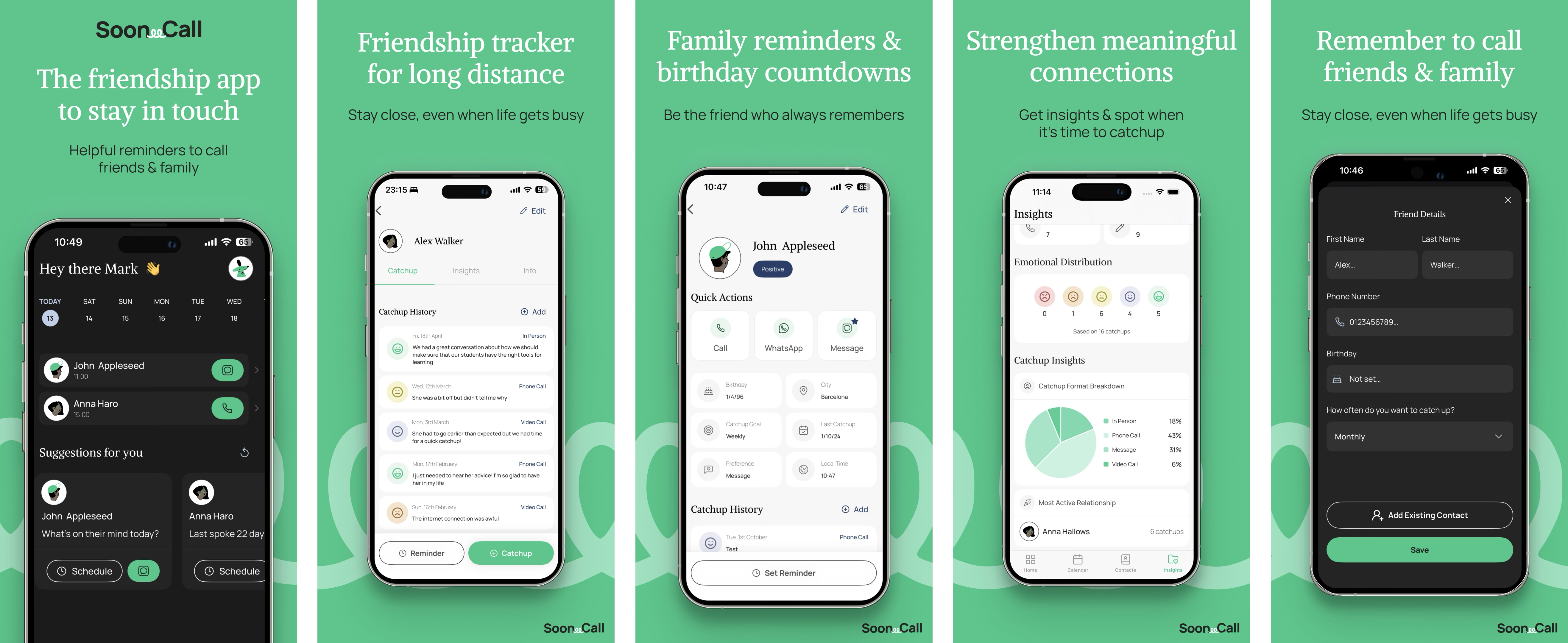
Example of using longtail keywords in screenshots to increase visibility for SoonCall.
What this means for 2026 app marketing
It’s going to be harder to run AB tests as results become more fragmented and personalised; however, testing and optimisation will be more critical than ever. You’ll need lots of variants mapped back to the keyword semantic clusters (more on that below) and custom listings.
Both the App Store and Google Play will likely place greater weight on message clarity than on design. Having beautiful screenshots isn’t enough. You need to tell a compelling story focused on the value your app delivers.
Video remains a key asset for both app stores. You should continue testing and refining app preview videos and measuring their impact on conversion and visibility.


 2025 Pocketworks Mobile Ltd